Skip to content
LUMING洛铭BIOMEDICAL DATA SCIENCE CONSULTING

SERVICE 02

Single-Cell and Multi-Omics Integration

scRNA-seq, bulk RNA-seq, WES and ctDNA integrated around the tumor microenvironment. Cell annotation, cluster atlas, sample-level results and QC.

When you need this

  • You want to know which cell population in the tumor microenvironment your drug acts on.
  • Your bulk RNA-seq results are ambiguous. Bulk sequencing averages across the whole tissue, so a signal from a small population is easily diluted.
  • You have genomic, transcriptomic or blood-based data that needs to be interpreted together.
  • The data is sequenced, but your internal team doesn't have the bandwidth.

METHODS

What we do

Data types

  • scRNA-seq (single-cell RNA sequencing): expression profiles read cell by cell, not as a tissue average.
  • Bulk RNA-seq.
  • WES (whole-exome sequencing).
  • ctDNA (circulating tumor DNA): tumor-derived DNA fragments in the blood, trackable from a blood draw.

Integration

We analyze genome, transcriptome and proteome data in one framework, centered on the tumor microenvironment: which cells are present, what each expresses, and how that changes with treatment.

QC comes first

Single-cell data most often goes wrong at quality control, so a QC report is a standard deliverable on every project. We confirm the data is usable before moving on to annotation and downstream analysis.

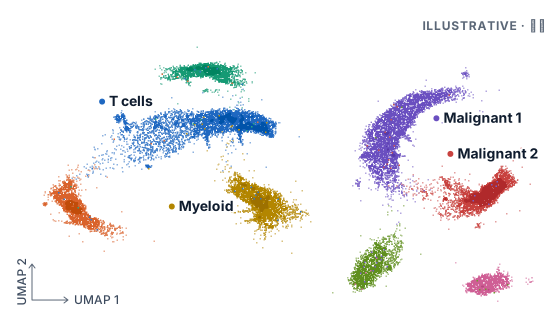
Single-cell UMAP

Eight clusters: T, NK, B, myeloid, fibroblast, endothelial and two malignant clusters.

Illustrative single-cell UMAP of more than 10,000 cells in eight clusters: T cells, NK cells, B cells, myeloid cells, fibroblasts, endothelial cells and two malignant clusters. Synthetic data.
ILLUSTRATIVE · Not real client data

DELIVERABLES

Deliverables

  • Cell annotation and cluster atlas
  • Sample-level results tables
  • QC report

QUESTIONS WE HEAR

Questions R&D teams bring us

"Which cell population in the tumor microenvironment does our drug mainly act on?"

"Our bulk RNA-seq shows no clear difference between groups. Is there really none, or is the signal diluted by other cells?"

"Can we compare ctDNA changes during treatment against imaging assessments?"

Start with one question

Tell us what data you have and what you want to learn from it. In a free 30-minute consultation, we'll tell you what this data can and can't answer.